With this, David Ogilvy in his book “Ogilvy on Advertising” (1983) underscores the connection between exceptional products (=the empty church) and effective marketing strategies (=allegedly saved souls that have to be inside the church to be saved) – the ones cannot live without the others.
David Ogilvy’s success formula from the 80s: exceptional products + effective marketing strategies. Still relevant today!
While the book was written 40+ years ago, some of its principles are still relevant today. Being beyond just a good and successful advertiser, David Ogilvy initiated professional discussions that still affect how ads work today. Here they are:
- Research. Before going into an ad business, Ogilvy worked for George Gallup’s Audience Research Institute in New Jersey, and this left an indelible mark on his approach – research first. He believed in and advocated the power of thorough research:
- on product: “First, study the product you are going to advertise. The more you know about it, the more likely you are to come up with a big idea for selling it“;
- on competitors: “Your next chore is to find out what kind of advertising your competitors have been doing for similar products, and with what success“;
- on consumers: “Now comes research among consumers. Find out how they think about your kind of product, what language they use when they discuss the subject, what attributes are important to them, and what promise would be most likely to make them buy your brand […] Informal conversations with half-a-dozen housewives can sometimes help a copywriter more than formal surveys in which he does not participate“.
- Brand positioning. Going beyond the mere visual representation, Ogilvy defined brand positioning as “what the product does, and who it is for“. Examples from his campaigns underscore the impact of his principles:
- for Dove: “I could have positioned Dove as a detergent bar for men with dirty hands, but chose instead to position it as a toilet bar for women with dry skin. This is still working 25 years later“;
- for SAAB: “In Norway, the SAAB car had no measurable profile. We positioned it as a car for winter. Three years later, it was voted the best car for Norwegian winters“.
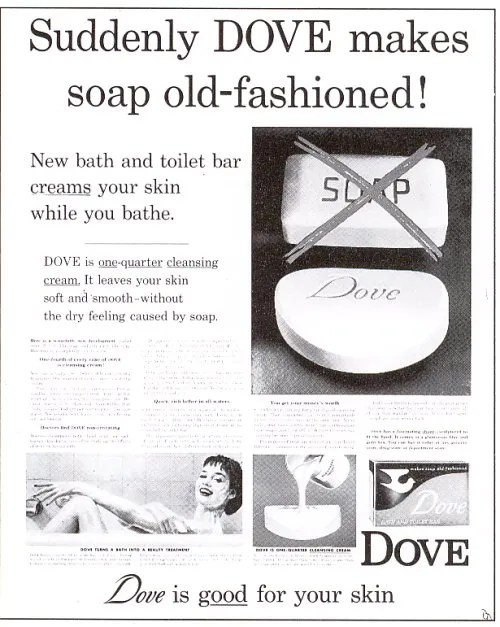
- Big idea. Ogilvy was convinced that good ads need big ideas: “You will never win fame and fortune unless you also invent big ideas. It takes a big idea to attract the attention of consumers and get them to buy your product. Unless your advertising contains a big idea, it will pass like a ship in the night“. For him, big ideas would not come from anywhere, they are based on and backed up by research: “Stuff your conscious mind with information, then unhook your rational thought process. You can help this process by going for a long walk, or taking a hot bath or drinking half a pint of claret“.
- Not the best, but “positively good”. Ogilvy suggested to make products or services not the best on the market, but “positively good” which would be good enough to differentiate and perform well in sales: “If you and your competitors all make excellent products, don’t try to imply that your product is better. Just say what’s good about your product – and do a clearer, more honest, more informative job of saying it“.
- Copy and visual composition. Ogilvy provided a comprehensive guide on the nuanced interplay between textual content (copy) and visuals for maximum impact in advertising. Examples are:
- on headlines: “Headlines get five times the readership of the body copy. If your headline doesn’t sell, you have wasted your money. Your headline should promise a benefit, or deliver news, or offer a service, or tell a significant story, or recognize a problem, or quote a satisfied customer“;
- on body copy: “When people read your copy, they are not alone. Pretend you are writing each of them a letter on behalf of your client. One human being to another, second person singular“;
- on general appearance of an ad: “Readers look first at the illustration, then at the headline, then at the copy. So put these elements in that order – illustration at the top, headline under the illustration, copy under the headline“.
- Effectiveness of ads: “What is a good ad? An ad which pleases you because of its style, or an ad which sells the most?” Ogilvy said both are nice, but the ones that sell the most are the best, whereas the most creative ones – get the creative ad awards. Usually, these are not the same ads.
- B2B advertising. “It used to be called trade advertising, or industrial advertising, but its practitioners have taken to calling it “business-to-business”, which sounds classier“. According to Ogilvy, the function of B2B ads is to pave the way for salesmen, by pre-selling the product and attracting leads. The techniques are almost the same as in B2C segment: “promising the reader a benefit, news, testimonials and helpful information“. But the promise has to be very specific, testimonials have to come from “experts in reputable companies“, news have to be straight. In B2B ads, inquires should be analysed with great precision, as they are the rich material for research (see 1).
As communication specialists navigate the intricacies of contemporary advertising in t the 21st century, the enduring wisdom of David Ogilvy still serves as a compass.
Thanks for the insights, David!
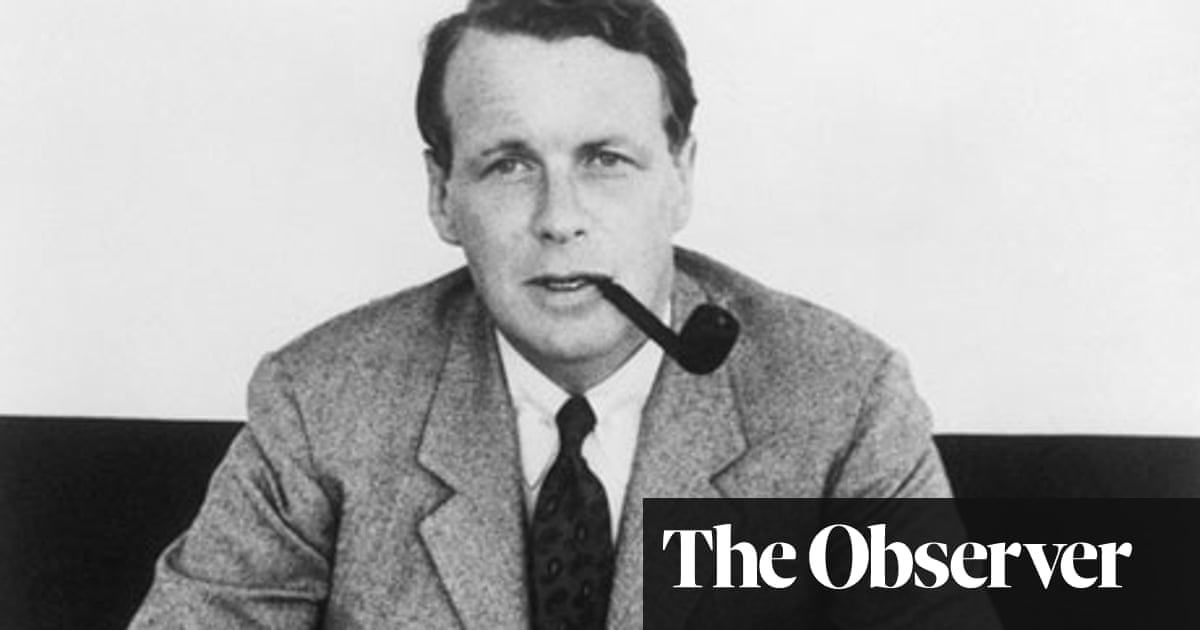
BTW, Ogilvy’s legacy is very much alive. Ogilvy agency was re-established and published the first-ever official book of David Ogilvy quotations, check their LinkedIn.
 Olga talks about #communications